March 2026 Agent UI Evolution: Design MCPs, Enterprise Security, and the Native-First Future
A mid-spring assessment of the rapidly changing Agentic tech stack. Exploring the explosion of Design-Oriented MCPs, the 3-layer architecture consensus, and why enterprise trust boundaries are shifting towards Native-First Presentation like A2UI.
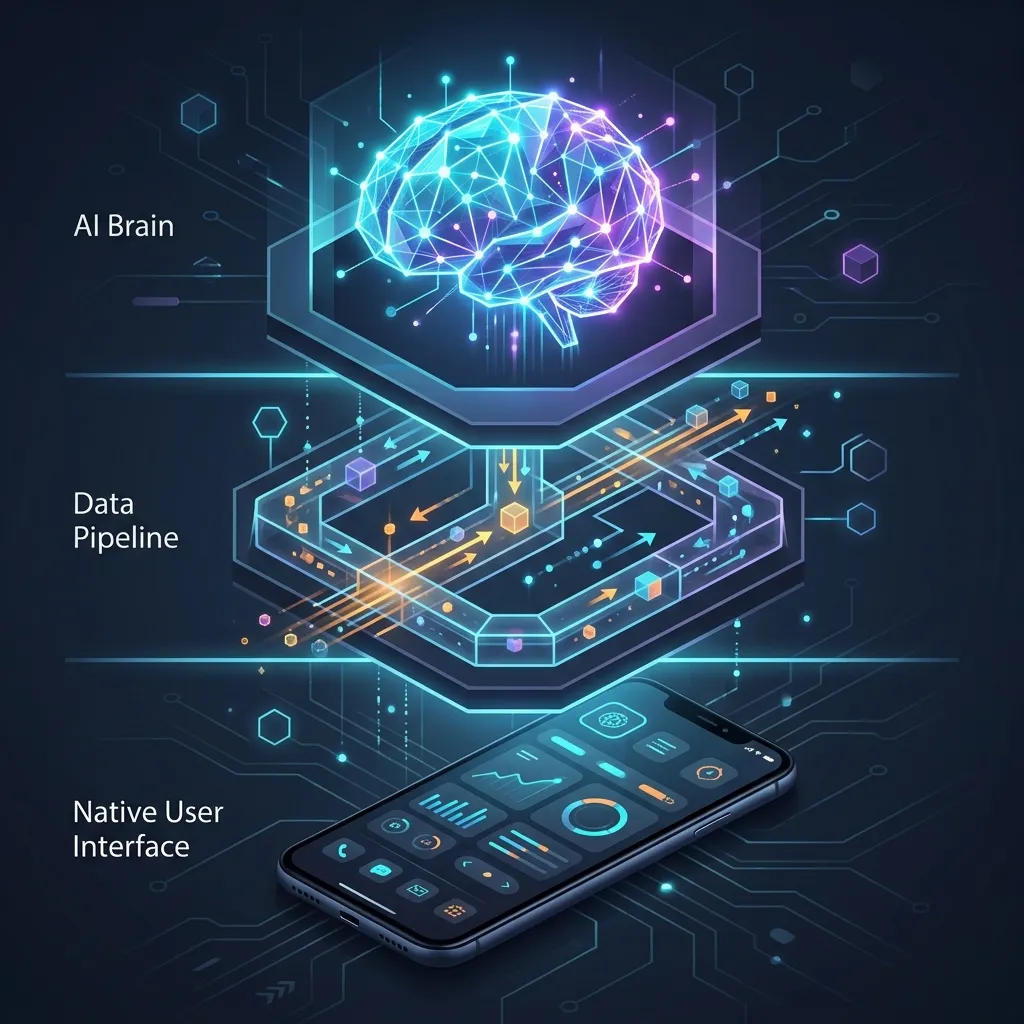
As March 2026 comes to a close, the pace of innovation within the Generative UI and Agentic Interface space is nothing short of explosive. The industry is rapidly shedding its “demo-ware” skin and coalescing around robust, scalable architectures suited for Fortune 500 deployments.
In this mid-spring update, the HiA2UI engineering team unpacks the three most significant shifts we’ve observed in the community over the past few weeks, and what they mean for the future of A2UI.
1. The Solidification of the “3-Layer Agentic Stack”
Just months ago, the community debated how AI tools should communicate with user interfaces. Today, reading through documentation from Google, Anthropic, and independent open-source leaders, a clear consensus has emerged: The 3-Layer Agentic Stack.
- The Orchestration Layer: The “brain’s logic,” handling multi-step reasoning, workflow planning, and agent coordination (e.g., Oracle Open Agent Spec).
- The Interaction Layer: The “nervous system,” standardizing the bidirectional stream of real-time events, tool calls, and state syncing (e.g., AG-UI by CopilotKit).
- The Presentation Layer: The “face,” responsible purely for rendering the visual surfaces and capturing user inputs.
This strict decoupling is incredible news for A2UI, which has steadfastly positioned itself as the definitive Native-First Presentation Layer. Rather than attempting to orchestrate agent logic, A2UI allows developers to strictly govern how generative blueprints are safely mapped to indigenous client UI components (React, Flutter, SwiftUI).
2. The Rise of “Design-Oriented” MCP Servers
The Model Context Protocol (MCP) continues its astronomical rise—now governed by the Agentic AI Foundation and surpassing a staggering 97 million monthly SDK downloads. While early 2026 saw the introduction of MCP Apps (allowing servers to return localized HTML iframes), late March has witnessed a more fascinating trend: Design-Oriented MCPs.
Projects like the Shadcn UI v4 MCP Server, Taiga UI MCP Server, and recently IBM’s Carbon Design System MCP (Public Preview) are bridging the gap between design systems and LLMs. These specialized MCP servers inject component documentation, usage metadata, and codebase examples directly into the agent’s context.
The A2UI Synergy
While MCP Apps rely on remote HTML serving, these Design MCPs are actually feeding the generation of A2UI blueprints. By grounding the LLM in the specific rules of a company’s design system (context provided by MCP), the agent becomes dramatically better at generating flawless, hallucination-free A2UI JSON payloads that map 1:1 with the host application’s locally installed React/shadcn components.
3. Enterprise Security and Trust Boundaries
Perhaps the largest shift in discourse over the past two weeks has been the pivot toward Enterprise-Grade Security. As Fortune 500s attempt to deploy generative interfaces into highly regulated environments (FinTech, Healthcare, Enterprise Mesh A2A interop), the inherent risks of executing AI-hallucinated visuals have taken center stage.
There is a growing enterprise wariness around the iframe sandbox model utilized heavily by MCP Apps. While iframe sandboxing is a battle-tested browser technology, escaping an iframe remains a lucrative endeavor for attackers. When an unpredictable LLM is responsible for generating the embedded HTML/JavaScript, the risk surface area of a UX/UI Injection attack expands exponentially. Moreover, how do you handle complex OAuth 2.1 authentication flows securely within a remote, agent-generated iframe?
A2UI’s “Zero-Execution” Advantage
This security reckoning is driving a massive influx of enterprise evaluations toward A2UI. Because the A2UI protocol transmits fundamentally “dumb”, non-executable JSON blueprints ({"type": "Chart", "data": [...]}), it completely bypasses code-execution risks.
The LLM cannot inject a malicious script because the host client simply doesn’t have a mechanism to execute scripts from the payload. The client exclusively instantiates pre-approved, strictly typed, locally compiled UI components. Providing safety through physical architectural impossibility—rather than just “strong sandboxing”—is proving to be A2UI’s most compelling enterprise superpower.
What’s Next?
The separation of orchestration, interaction, and presentation layers is moving generative UI toward more auditable product architectures. Maturity still depends on protocol stability, renderer quality, accessibility, and production controls. See the current A2UI protocol version guide.